OTTAWA – The Ottawa Real Estate Board (OREB) has consistently advocated for full compensation for REALTORS® impacted by the actions of iPro Realty and the mishandling of trust fund accounts.
RECO’s province-appointed Administrator, Jean Lépine, confirmed in an updatetoday that all affected consumers have now been fully reimbursed, and the insurer’s program manager has reviewed 1,000 of the 2,500 REALTOR® claims currently on file, and with that visibility, feel comfortable starting paying out commissions at 50% of total amount owing on transactions that have closed or are closing, beginning Wednesday, December 17, 2025.
While this progress is welcome and a strong step in the right direction, it does not yet go far enough. REALTORS® continue to face financial uncertainty for work that has already been completed in good faith. Many haven’t received payment for months.
OREB will continue to press for timely and full compensation for all affected REALTORS®, swift action and significant consequences for others who breach the public’s trust, and for meaningful reforms to ensure accountability and prevent similar failures in the future.
Like the public, our members must have confidence that the regulatory and insurance framework they are required to participate in will protect them when bad actors undermine the system.
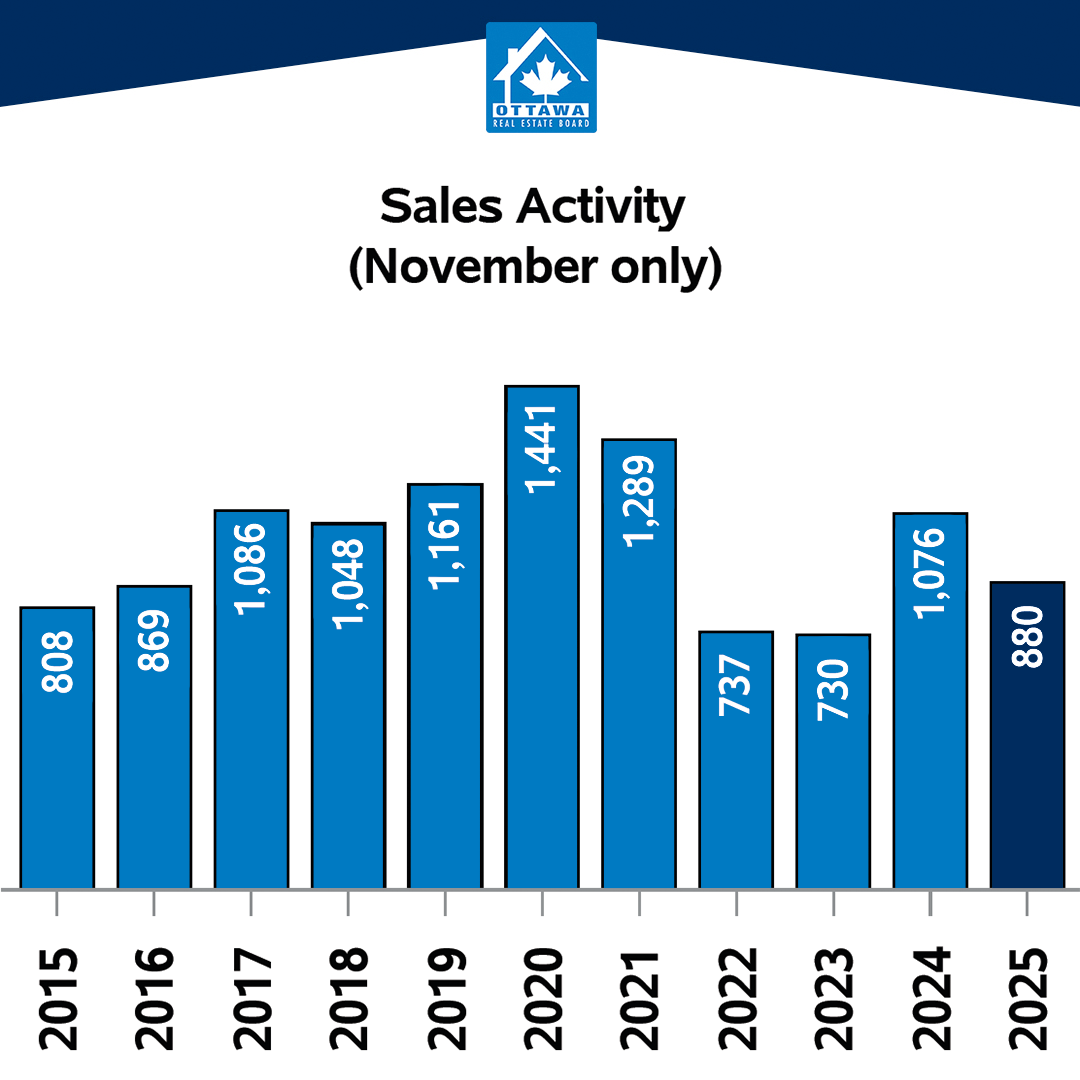
Ottawa eased into a slower market rhythm in November, shaped by early winter weather and a cautious economic environment. Sales declined from October and fell below November 2024 levels. Although active listings dipped month over month, months of inventory (MOI) rose again after tightening earlier in the fall. The market remained broadly balanced, but the data shows a tilt toward higher supply, with November’s seasonal slowdown more pronounced than usual.
Recent rate cuts offer some optimism for renewed buyer engagement through the typically quiet winter months, setting the stage for a steadier start to the new year and a more energized spring. At the same time, elevated inventory in the townhome and apartment segments warrants ongoing attention to ensure clients understand the current dynamics.
November Snapshot: Home Sales in Ottawa
November total sales: 880, down from 1,177 in October 2025
18.2 per cent lower than November 2024
Year-to-date sales remain 1.5 per cent ahead of this point in 2024
Average sale price: $680,496, up a little more than 2 per cent year over year
Year-to-date average: near $700,000, 3 per cent higher than a year ago
Gains are largely driven by single-family sales, which continue to climb
Single-family homes averaged $825,827 in November 2025, up 4.8 per cent compared with November 2024 and up 4 per cent year-to-date
Supply Continues to Build
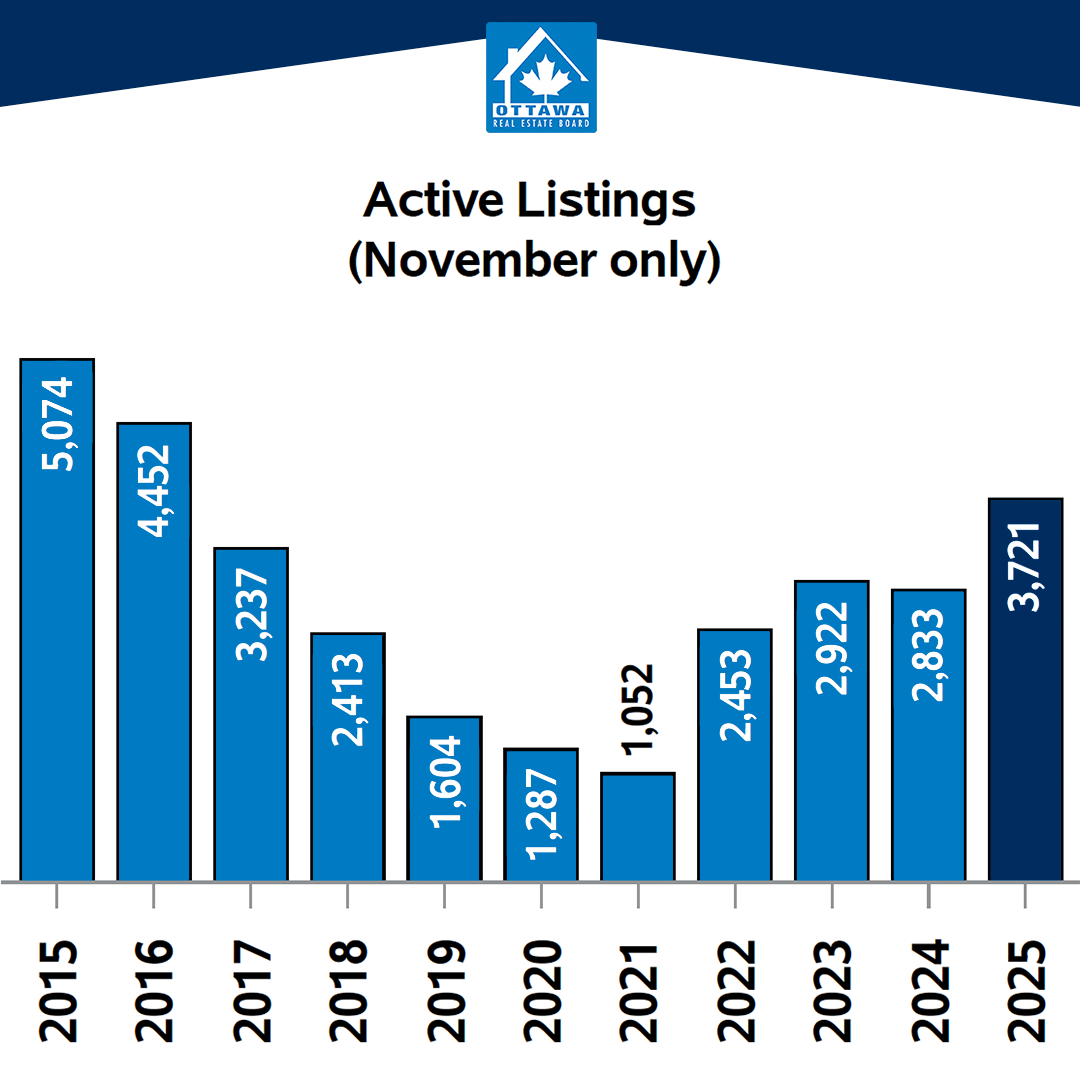
While inventory typically climbs in November, the increase this year is more pronounced. Active listings reached 3,721, and months of inventory rose to 4.2, a meaningful shift from last year’s tighter conditions. That additional choice is influencing pricing and buyer behaviour across property types. Townhomes averaged $542,607 in November, down from both October and last year’s year-to-date figures. Apartments face the most supply pressure: condo MOI climbed above seven and sales were down by more than a third year over year. Prices in this segment have held up better than townhomes on an annual basis, but the volume of available product signals a softer environment than the stable average sale price suggests.
Ottawa’s apartment market is particularly important to watch in light of Toronto’s experience. Toronto is working through one of the most significant buildups of condo inventory in recent memory, putting clear pressure on prices. Ottawa is not in the same position, but the increase in apartment inventory is real. REALTORS® will want to monitor this segment closely through the winter, especially if listings continue to rise faster than sales. Nearly 70 per cent of new home starts this year are concentrated in rental and condo projects, creating a substantial pipeline of multi-unit supply coming online in the coming years. While these starts influence the long-term rather than the immediate picture, they remain a key factor to watch. Toronto’s condo supply challenges emerged over several years as resale listings accumulated alongside an influx of new completions.
Residential Market Activity: Big Picture
Total 2025 home sales to date: 13,075
Increase in home sales compared with 2024: 1.5 per cent
Average sale price in November: $680,496
Increase in sale price from 2024: 2.2 per cent, down more than 4 per cent from October*
Year-to-date average home price: $699,635, a 3.0 per cent increase over the first 11 months of 2024
Total value of homes sold in November: $599 million (16.5 per cent decrease year over year)
Year-to-date sales: more than $9 billion, a 4.6 per cent increase over 2024
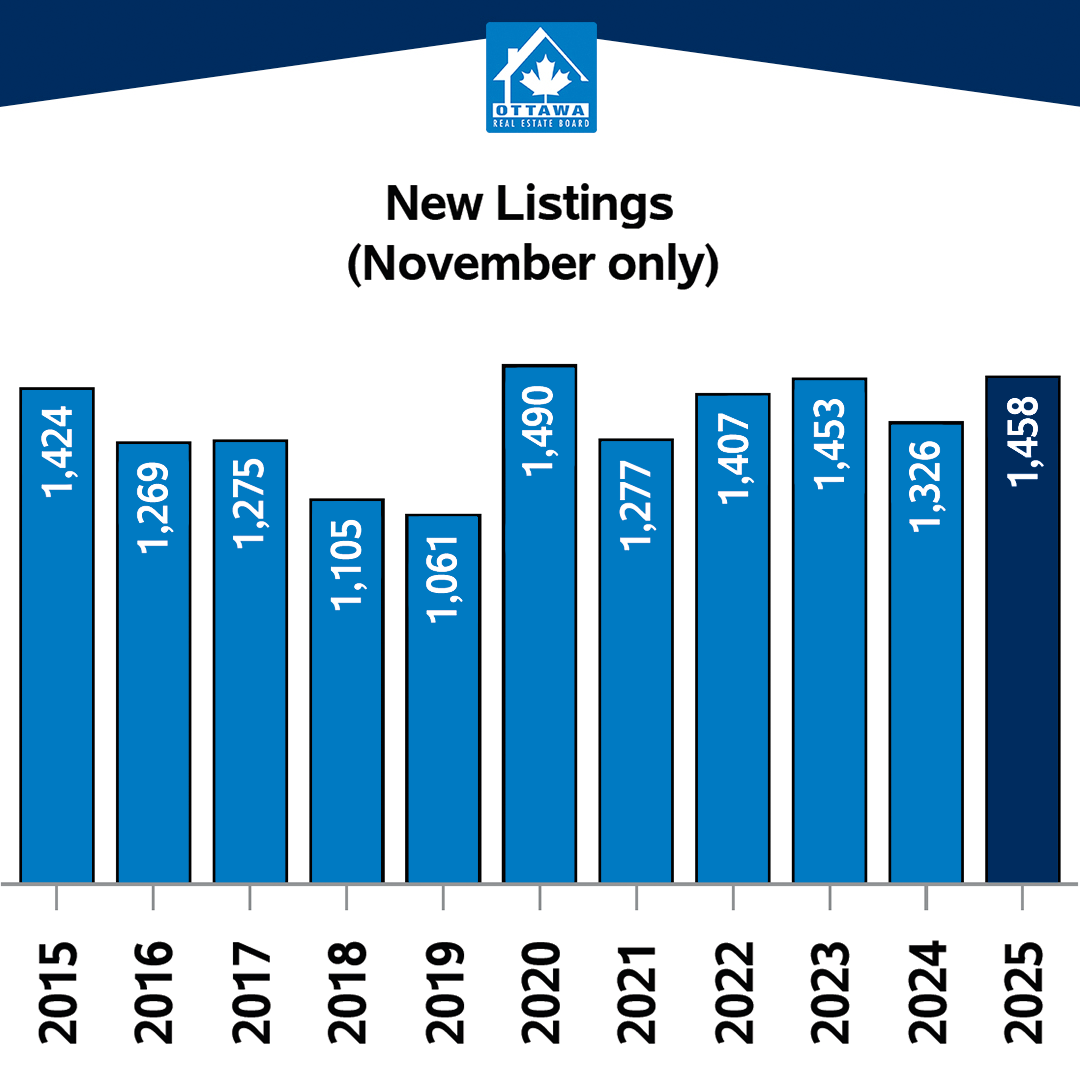
New residential listings in November: 1,458, down 39 per cent from October but 10 per cent higher than November 2024
November active listings: 3,721, a 12 per cent decrease from October but 31.3 per cent higher than 2024
*Prices typically decrease from October to November. A 4 per cent drop is notable as it is larger than usual.
This active listing indicator is trending higher than each of the past five years, indicating this is more than the cyclical supply buildup associated with late fall and early winter.
Months of inventory (MOI), a key measure of supply, rose overall from 3.6 in October to 4.2, reflecting what remains a generally balanced market. Though it is worth noting that the disparity in MOI between property types.
Months of Inventory
Single-family: 4.0
Townhome: 3.1
Apartment: 7.3
OREB is working to resolve a discrepancy in the November HPI data. It will be distributed as soon as possible.
The Ottawa Real Estate Board (OREB) welcomes the federal government’s new housing partnership with the City of Ottawa, announced today under the Build Canada Homes program.
The $400-million joint investment will deliver up to 3,000 mixed-income and affordable units, including 2,000 homes on federal lands supported by modern building methods, faster approvals and innovative financing. This announcement represents a meaningful step toward improving housing supply and affordability in the nation’s capital.
We are particularly encouraged that one of the first Build Canada Homes partnerships is happening here in Ottawa.
“This city and this partnership is a model for how we want to build homes across the country,” Prime Minister Mark Carney said Monday, when he made the announcement at the Mayor’s Breakfast event with Ottawa Mayor Mark Sutcliffe.
Housing solutions must serve the full spectrum of needs in our community, from supportive and affordable housing to purpose-built rental and attainable ownership.
This approach aligns with OREB’s long-standing call for policy tools that expand choice, accelerate construction and reduce barriers to bringing more homes to market. Measures such as streamlined permitting, reduced development-related fees and collaborative public-private delivery models will help ensure that more Ottawa residents can find stable, appropriate housing that meets their needs.
This demonstrates both the urgency of our local housing challenges and the potential for real leadership and innovation in responding to them. OREB looks forward to working with all levels of government, industry partners and community organizations to help ensure these new homes reflect local housing needs and contribute to a more diverse, resilient and sustainable housing market for Ottawa residents.
OREB congratulates Build Canada Homes CEO Anna Bailão, Mayor Mark Sutcliffe, and Prime Minister Carney for their leadership in advancing this initiative for Ottawa.
The Ottawa Real Estate Board (OREB) supports the Government of Ontario’s decision to appoint an administrator to oversee the Real Estate Council of Ontario (RECO) and its Board of Directors to ensure the regulator is carrying out the pledged reforms. We look forward to working with Jean Lépine as he takes on the role of administrator to RECO in the coming days.
OREB has consistently maintained that strong, transparent, and accountable regulation is essential to maintaining confidence in real estate transactions. This decision by the provincial government reflects the seriousness of the situation and will help restore public confidence.
We will continue to advocate for a regulatory environment that strengthens consumer trust, supports high professional standards, and safeguards the reputation of our industry. We remain committed to constructive, solution-focused collaboration throughout this period of oversight and reform.